
29.09.2026
CCS goes “Big in Japan” – and TCM wants to be part of the journey
Japan is rapidly translating its CCS ambitions into concrete projects, backed by strong government support and long-term industrial commitments. TCM wants to contribute its experience as Japan’s CCS journey moves from feasibility and engineering towards implementation.
“Japan is moving quickly from CCS ambitions towards concrete projects,” says Ismail Shah, Managing Director of Technology Centre Mongstad (TCM).
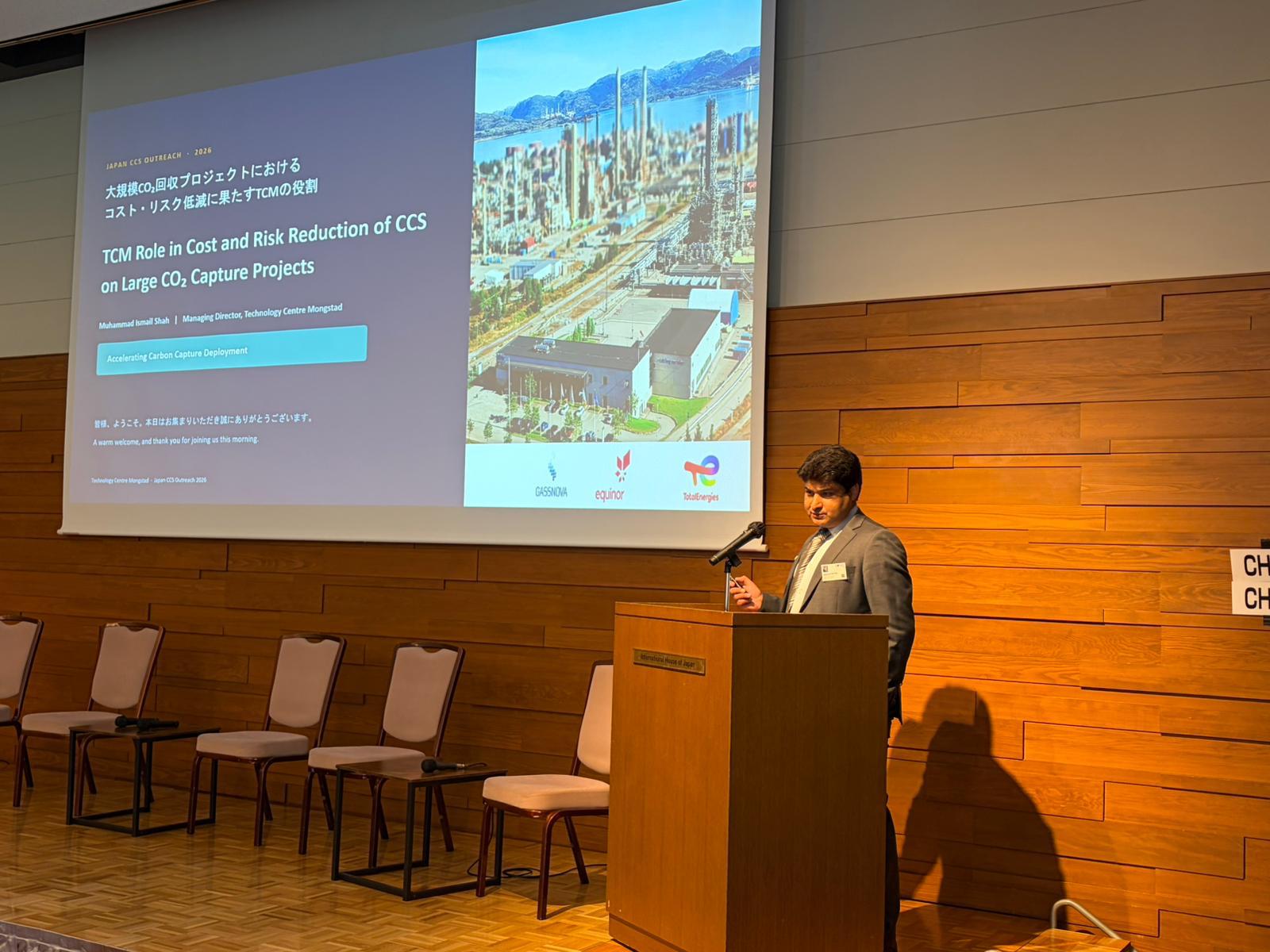
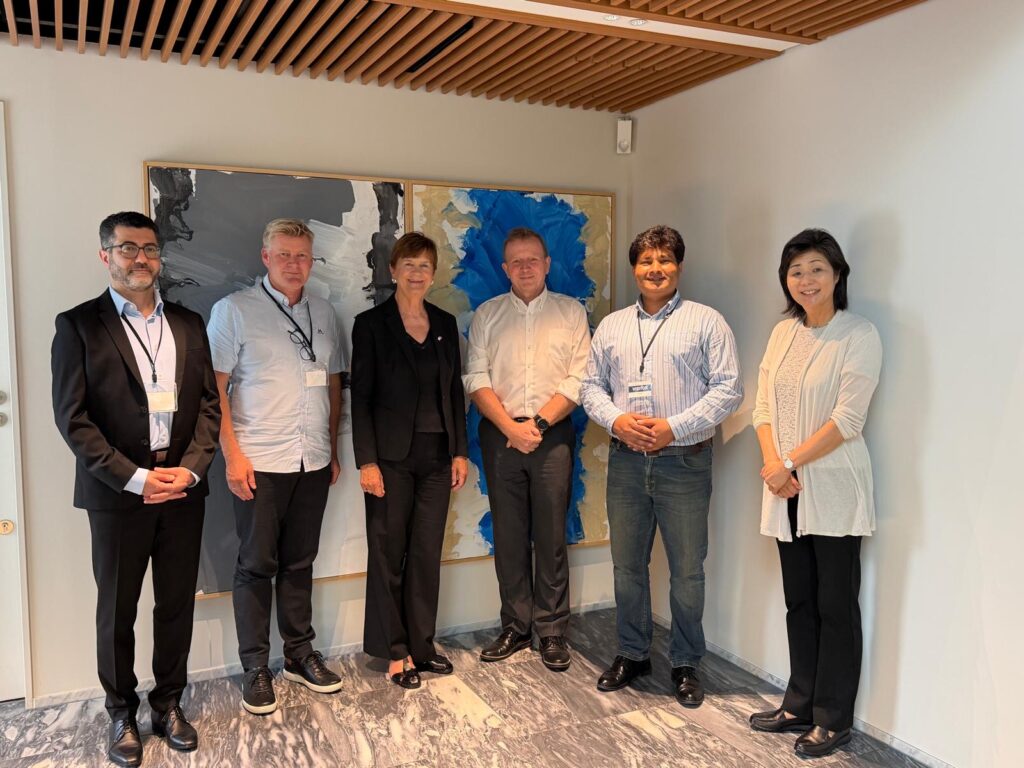
Shah recently spent a week in Japan together with TCM Business Development Manager Rouzbeh Jafari and TCM Board Chair Svein Ingar Semb of Gassnova. The delegation met technology developers, engineering companies, utilities and industrial stakeholders working to establish CCS value chains.
The Japanese government, through JOGMEC, is supporting nine Advanced CCS Projects aimed at developing integrated CCS value chains, with CO2 storage expected to start by 2030. Together, the projects are intended to contribute to Japan’s national ambition of storing 6–12 million tonnes of CO2 annually by 2030. In the longer term, Japan’s CCS roadmap envisages annual storage of 120–240 million tonnes by 2050. In addition at least five CCS projects driven by industrial players is announced.
This ambition is backed by substantial government support and long-term policy measures designed to provide greater financial predictability for companies investing in CCS.
From CCS ambition to implementation
“What impressed me most was the combination of government commitment, strong technology developers and industrial companies already preparing real projects,” says Shah.
“As these projects move from feasibility and engineering towards implementation, TCM can bring 14 years of independent large-scale testing and operational experience to help reduce technical risk and support better-informed technology and project decisions.”
TCM has extensive experience across the development and testing of CO2 capture technologies. Its offering includes large-scale solvent testing, testing of emerging capture technologies at the Site for Emerging Technologies (SET) facility, emissions and solvent degradation assessment, operational performance testing and support for technology scale-up and design-risk reduction.
Through its Advisory Services, TCM can also support companies evaluating capture technologies and CCS projects, providing independent expertise and practical experience from large-scale operations.
Long-term financial certainty
A key element in Japan’s CCS strategy is financial predictability.
Japan is developing support mechanisms designed to help bridge the cost gap between CCS and conventional emissions over a long-term support period. The government is also providing substantial support for the development of CCS infrastructure and value chains as part of its wider Green Transformation (GX) strategy.
Japan’s geological conditions add another dimension. Because of concern of earthquakes and inherit high cost, feasible domestic storage capacity is limited, the country is also developing cross-border CCS solutions, including the transport of liquefied CO2 to storage sites outside Japan, primarily Southeast Asia.
This combination of industrial ambition, government support and international CCS development is creating a market where TCM sees significant potential for cooperation.
Building relationships with Japanese industry
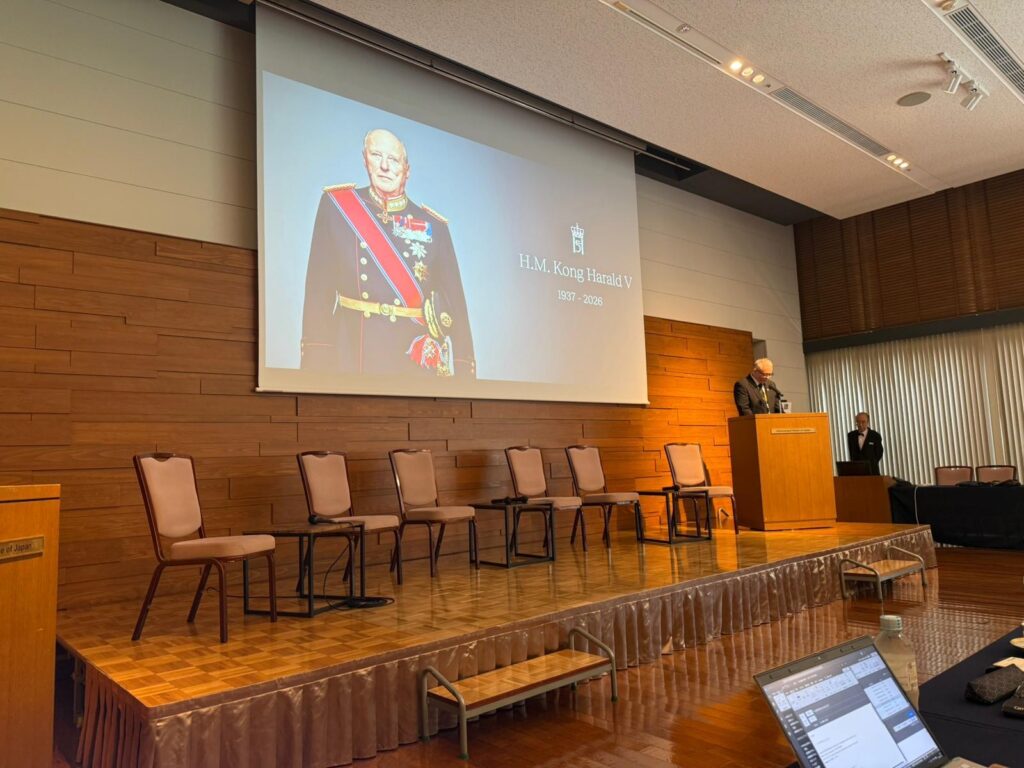
The Norwegian Embassy and Innovation Norway’s Tokyo office helped facilitate a seminar with more than 60 participants from different parts of Japanese industry.
“At the seminar, we were able to present what TCM has achieved in helping to move carbon capture from ideas and laboratory-scale development towards large-scale implementation,” says Shah.
During the visit, TCM also held discussions with leading Japanese technology developers, engineering companies, utilities and industrial emitters about potential cooperation in testing and Advisory Services.
Mitsubishi Heavy Industries (MHI) Group was among the companies represented in the discussions. MHI has previously tested its solvent technology at Mongstad, including a four-month testing campaign in 2021.
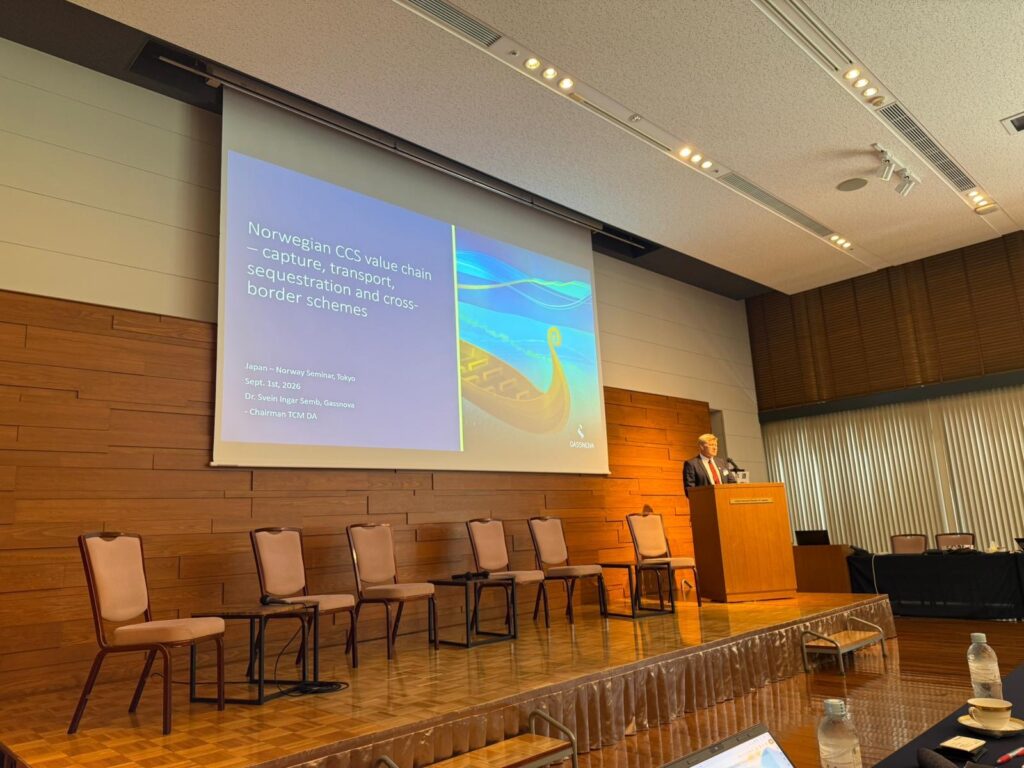
Gassnova presented the Norwegian experience with Longship – Europe’s first complete CCS value chain – demonstrating how Norway has established an integrated system covering CO2 capture, transport and permanent storage.
For Japanese companies now preparing the next generation of CCS projects, TCM believes that this practical experience can help reduce uncertainty as technologies and projects move towards implementation.
A glimpse of Japan’s CO2 value chains
The program also included a visit to Yokohama, where an innovative collaboration between Tokyo Gas, Mitsubishi Heavy Industries and the City of Yokohama is demonstrating CO2 capture from waste-to-energy.
The captured CO2 is transported to a Tokyo Gas facility and used as feedstock for methanation to produce e-methane.
The project illustrates how Japanese companies and municipalities are developing integrated CO2 value chains, combining capture, transport and utilization, while also exploring technologies for capturing and transporting CO2 from energy-intensive industries along the waterfront.
“It is hard not to be impressed by the effort and energy Japan is putting into its ambition to achieve carbon neutrality by 2050,” says Rouzbeh Jafari.
“The cooperation between government, technology developers and industry is particularly impressive. Japan has the industrial capabilities needed to turn ambitious plans into large-scale projects.”
From Mongstad to Japan
For TCM, the visit was about more than learning about Japan’s CCS ambitions. It was also an opportunity to establish relationships and explore potential long-term cooperation in a market where business culture and decision-making processes can differ considerably from those in Europe.
“We are grateful for the support from the Norwegian Embassy and Innovation Norway in Tokyo, and we look forward to continuing this cooperation,” says Shah.
“The expertise and local knowledge they provide are important when building relationships and developing business in a market that is culturally and commercially different from what many of us are used to in the West.”
TCM believes its combination of large-scale testing facilities, operational experience and Advisory Services provides a strong platform for supporting Japanese companies.
“We have extensive experience with mature amine-based capture technologies as well as a range of emerging technologies, both of which are relevant to projects in Japan,” says Shah.
“We also have extensive expertise in assessing emissions and risks associated with CO2 capture, as well as in reducing solvent degradation and its associated costs.”
“Combining world-class large-scale testing facilities with independent expertise and hands-on operational experience gives TCM a strong platform from which to support Japanese technology developers and industrial companies.”
The title “Big in Japan” may have been made famous by Alphaville in the 1980s. For TCM, however, it now has a very different meaning: an opportunity to help Japanese industry move CCS from plans and projects to full-scale operation.
“Japan is moving fast. TCM wants to be part of that journey.”