
13.08.2026
Building a new future in Norway: Meet Ahmad Wakaa at TCM
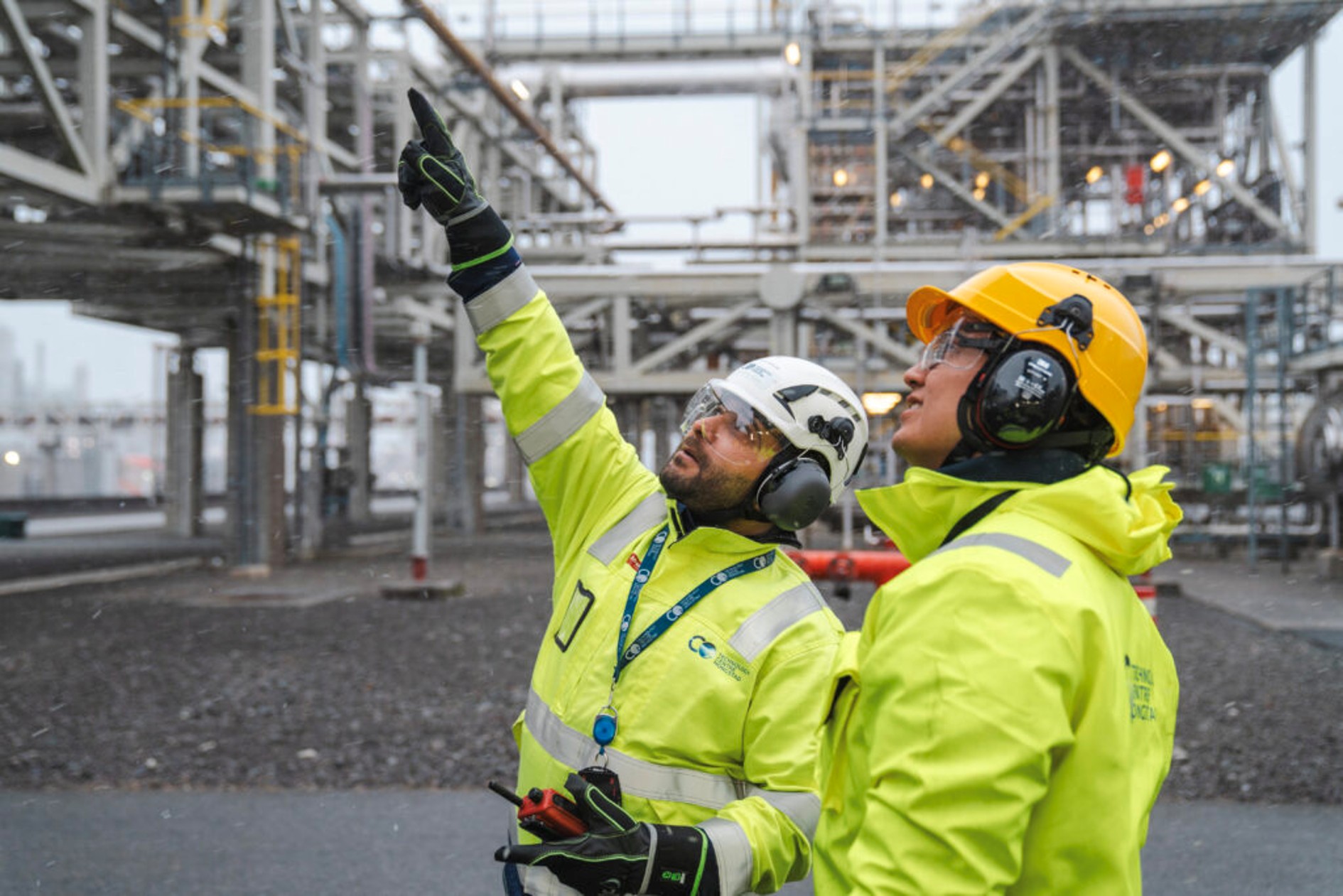
Ahmad Wakaa came to Norway as a refugee from Syria in 2015. Eleven years later, he works as Onsite Testing Manager and Senior CO2 Capture Technologist at TCM, where he helps test and develop carbon capture technologies at industrial scale. His journey has taken him from rebuilding his life in a new country to helping develop solutions for one of today’s most important climate challenges.
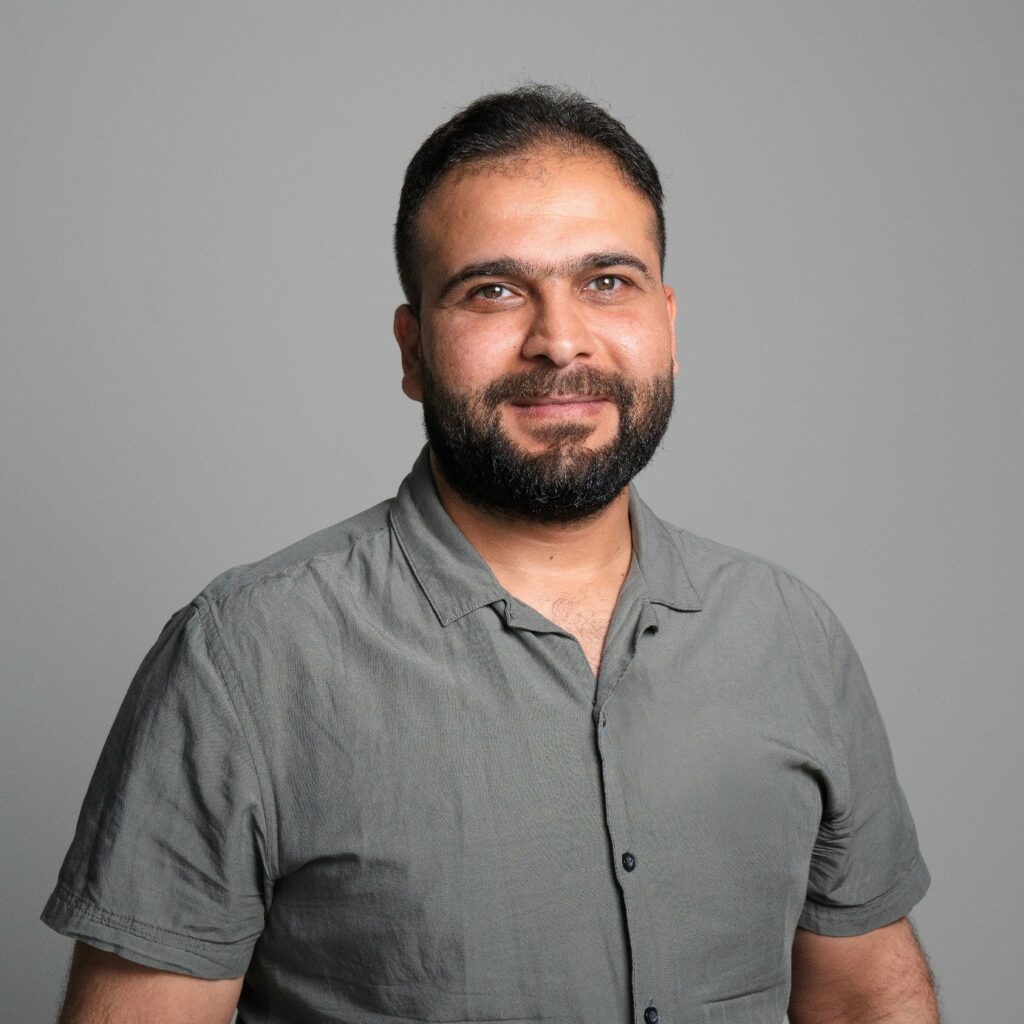
“Coming to Norway from Syria in 2015 was a major turning point in my life.”
Background Information
Name: Ahmad Wakaa (39)
Marital Status: Married, two children
Hometown: Al Qamishli, Syria
Position: Onsite Testing Manager & Senior CO2 Capture Technologist
Education: Master of Engineering (MEng) in Process Engineering (Multiphase Systems) from the University of Bergen, Norway. Bachelor of Engineering (BE) in Petroleum Engineering from Homs University, Syria
Previous Experience:
- Held several positions at TCM since December 2019, currently serving as Onsite Testing Manager & Senior CO2 Capture Technologist since November 2024
- Process Engineer at Equinor Mongstad Refinery, January 2019 – December 2019
- Operations / Process Engineer, Oudeh Petroleum Company, September 2013 – August 2015
- Junior Production Engineer, Al Furat Petroleum Company (JV with Shell), August 2012 – August 2013
Strengths: My main strengths are analytical thinking and attention to detail. I enjoy tackling technical challenges and delivering high-quality results. I am also proactive, taking initiative and continuously looking for ways to improve processes.
Can’t Stand: I can’t stand working without clear goals, so I make sure to ask the right questions early and align expectations with the team.
Hobbies and Interests: I enjoy staying active through fitness and skiing, and I also enjoy following football. These activities help me stay disciplined and focused. I love travelling, as it exposes me to new cultures and perspectives.
Dreams/Aspirations: In the long term, I aspire to take on a role where I can contribute both technically and strategically to the advancement of CCS technologies.
“You arrived in Norway as a refugee from Syria in 2015. Can you tell us about your experience of leaving your homeland and building a new life in a foreign country?”
“Coming to Norway in 2015 was a major turning point in my life.
Leaving my home country was difficult, but it also gave me the opportunity to start a new chapter.
When I arrived, I focused on adapting quickly by learning the language, understanding the culture, and building a professional path.
Over time, the experience made me more resilient and adaptable. It also taught me the value of hard work and continuous learning, which still guides me today.
Outside of work, I enjoy staying active and spending time outdoors in Norway.”
“You already had a bachelor’s degree and engineering experience when you came to Norway. Later, you chose to study again at the University of Bergen. What motivated that decision?”
“When I started working at the Equinor Mongstad refinery, I realised I wanted a deeper understanding of downstream processes and simulations.
That motivated me to pursue a master’s degree at the University of Bergen.
It helped me strengthen my technical foundation and connect theory more closely with industrial practice.”
“You started your career in Norway at Mongstad and have worked at TCM since 2019. What attracted you to TCM?”
“What attracted me to TCM was its unique role as a test facility for carbon capture technologies.
It operates on an industrial scale and allows technologies to be tested under real conditions before full deployment.
What motivated me was the impact, as TCM plays an important role in de-risking CCS technologies and supporting their wider adoption.
For me, it was an opportunity to combine hands-on engineering work with contributing to a global climate solution.”
“What was your understanding of carbon capture technology before joining TCM?”
“Before joining TCM, I had a general understanding of carbon capture and its role in reducing emissions and addressing climate change.
I knew it was important for achieving international climate targets, including the Paris Agreement and net-zero ambitions.
However, my knowledge was mostly theoretical.
At TCM, I gained a much deeper understanding of how these systems perform in real industrial operations and what challenges arise during scale-up.”
“What is the most exciting aspect of your role at TCM?”
“The most exciting part of my role is being involved in test campaigns from planning through to execution.
It gives me hands-on experience with both technical and operational aspects of carbon capture.
This includes areas such as solvent performance, emissions, and process behaviour at pilot scale.
Contributing to the generation of high-quality data that supports technology development is very motivating.”
“What does a typical workday look like for you?”
“As technical lead on site, I work closely with both technical and operations teams to ensure test campaigns run safely and efficiently.
We have regular meetings to review performance, discuss challenges, and plan next steps.
During vendor campaigns, I also coordinate with external teams to optimise testing activities.
Some days are routine, while others involve troubleshooting and fast decision-making.”
“Which colleagues or teams do you collaborate with most closely, and how does that collaboration work in practice?”
“I work closely with several teams depending on the activity.
During test campaigns, I mainly collaborate with the technical and operations teams, including the operations and instrumentation engineers.
When plant modifications are needed, I work with the engineering team to define and implement changes.
Overall, collaboration at TCM is very strong. Clear communication and teamwork make it easy to work across disciplines.”
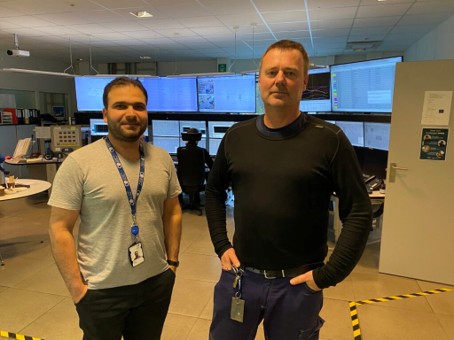
“The on-site technical team is essential in delivering high-quality results,” Ahmad says in this interview.
“What gives you the most energy and satisfaction in your work?”
“The combination of teamwork and technical challenges gives me the most energy.
I am fortunate to work with skilled and supportive colleagues.
On the technical side, I enjoy learning new things and especially troubleshooting process issues.
Solving complex problems and seeing improvements in performance is very rewarding.”
“How do you apply your educational background in your current role?”
“My education gives me a strong foundation in process understanding.
I use it daily when analysing test performance, supporting troubleshooting, and optimizing operations.
It helps me approach challenges in a structured and analytical way.”
“What do your family and friends think about the work you do?”
“My family and friends are very supportive.
They are proud that I work in an industry that contributes to reducing CO2 emissions and addressing climate change.”
“What do you see as the biggest challenge in your role?”
“There isn’t a single biggest challenge, but a few recurring ones.
One is ensuring good coordination between vendor teams and internal stakeholders. This requires clear communication and alignment.
Another is handling unexpected issues, such as emissions deviations. These situations require fast decisions and close collaboration across teams.
Overall, the role requires coordination, technical understanding, and the ability to respond quickly.”
“If you were to give a colleague a flower in recognition of their contribution, who would it be and why?”
“I would give it to the on-site technical team.
They played a key role in delivering multiple successful test campaigns, including data analysis and reporting.
Their effort and teamwork were essential in delivering high-quality results.”
“How do you unwind and recharge after a long day at work?”
“I usually unwind by spending time with my family and children.
That is the most important way for me to recharge.
When I have time, I also go to the gym. It helps me clear my mind and maintain balance.”
“Looking ahead, do you have any particular goals or plans for the future?”
“My goal is to continue contributing to the development of carbon capture technologies.
I want to be part of the transition from testing and pilot phases to full-scale industrial deployment.
It is motivating to know that this work contributes to real emissions reductions and climate solutions.”