12.11.2026
TCM Shares New Carbon Capture Insights at Leading International Conference
Three scientific presentations by TCM’s Ahmad Wakaa at GHGT-18 in Perth highlighted new findings from CESAR1 solvent testing, underlining the importance of industrial-scale testing and international knowledge sharing in advancing cost-effective carbon capture technologies.
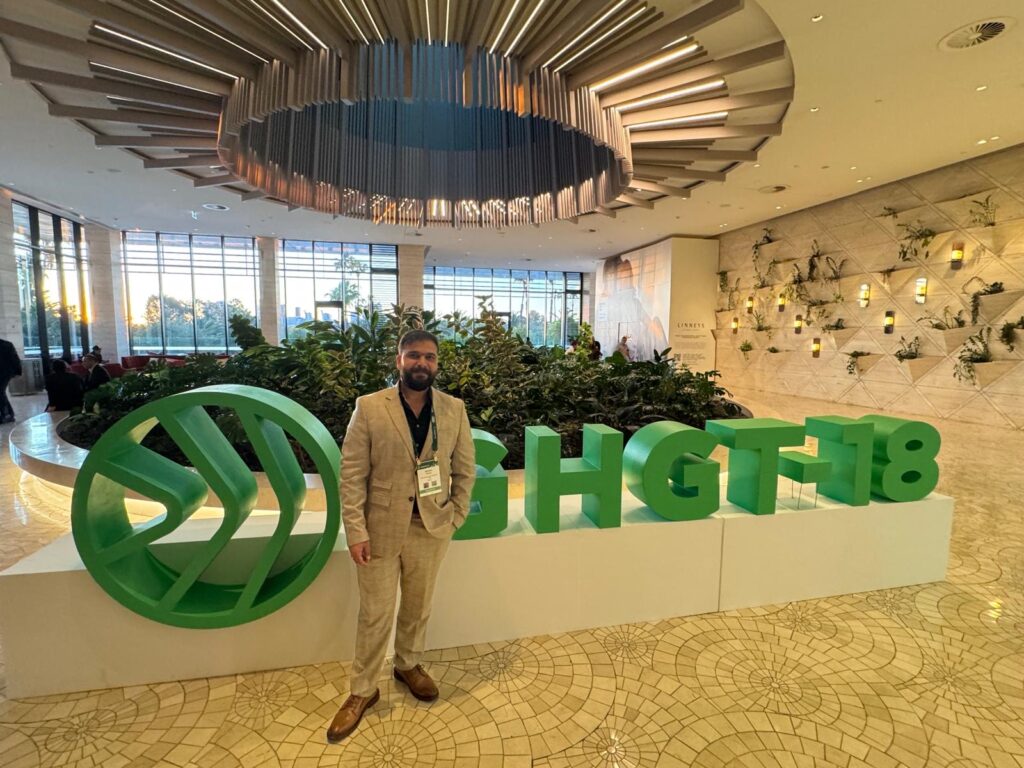
Technology Centre Mongstad (TCM) was among the contributors to the scientific programme at the 18th Greenhouse Gas Control Technologies Conference (GHGT-18), held in Perth, Australia, from 25 to 29 October 2026.
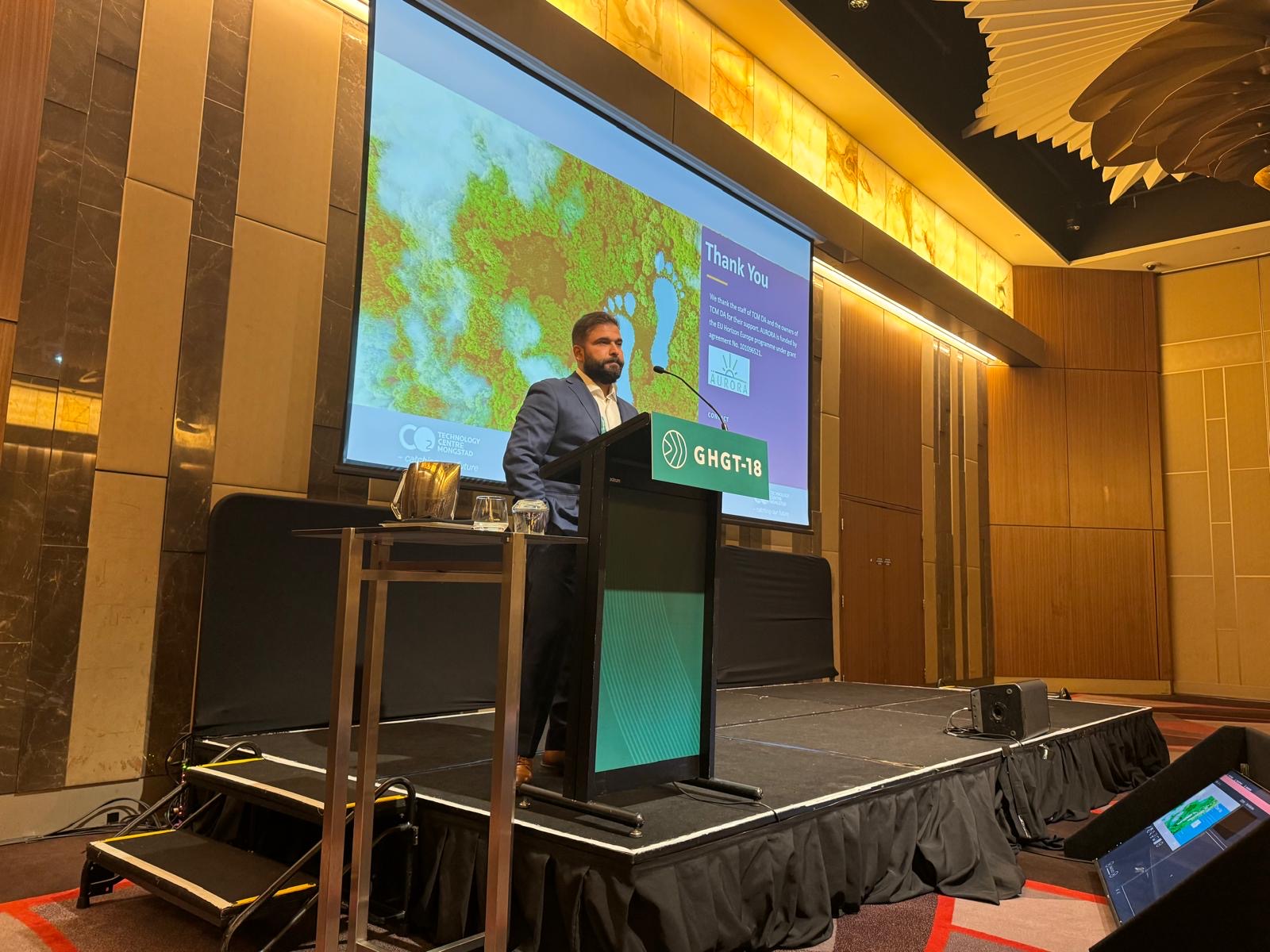
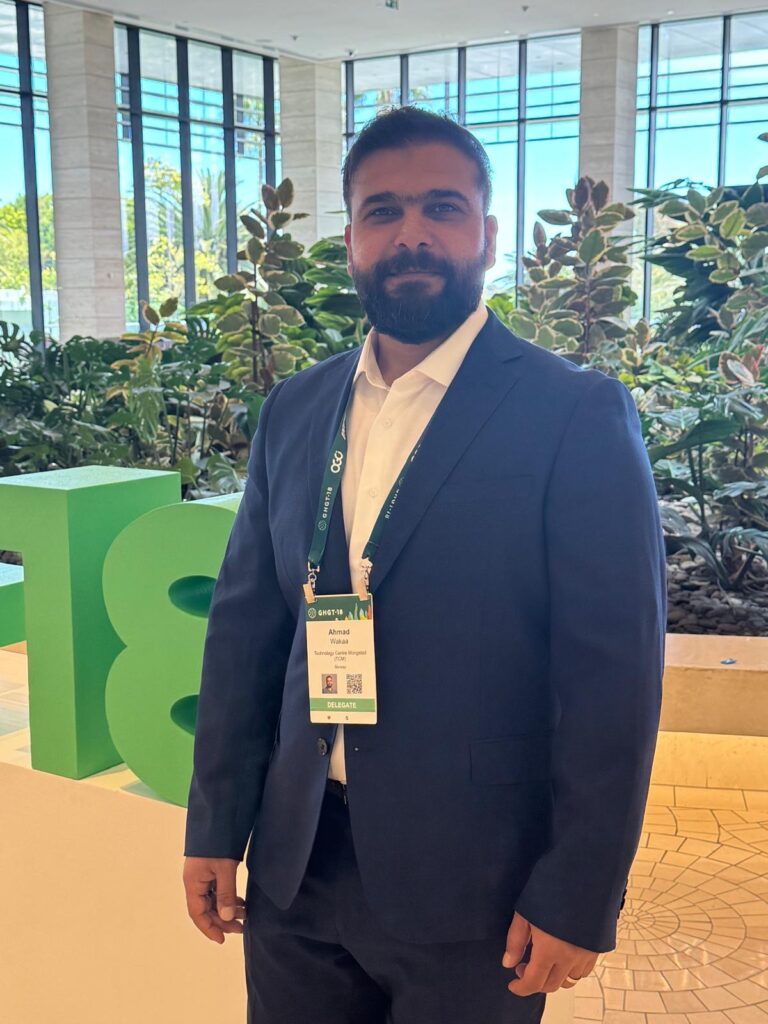
Representing TCM, Onsite Testing Manager Ahmad Wakaa delivered three presentations sharing recent findings from TCM’s testing and development activities involving the advanced CESAR1 solvent.
The presentations attracted considerable interest from conference participants and provided an opportunity to discuss the practical challenges and opportunities involved in developing more efficient and cost-effective CO2 capture technologies.
Three presentations – one common objective
Wakaa’s contributions covered three important aspects of post-combustion CO2 capture, drawing on results from the EU-funded AURORA project and TCM’s owners testing campaign 2025.
The first presentation, “Optimising Emissions Dynamics in Amine-Based Carbon Capture Using CESAR1 Solvent: Co-Benefits, Control Strategies and Multi-Instrument Measurements”, explored how emissions associated with flue gas impurities and amine-based capture processes can be better understood and managed through operational strategies and advanced measurement techniques.
The second, “Performance of CESAR1 Solvent Under Diverse Industrial Conditions: Insights from the AURORA Testing Campaign at TCM”, presented findings from the AURORA test campaign conducted in 2025, which investigated the solvent’s performance under a range of realistic industrial operating conditions.
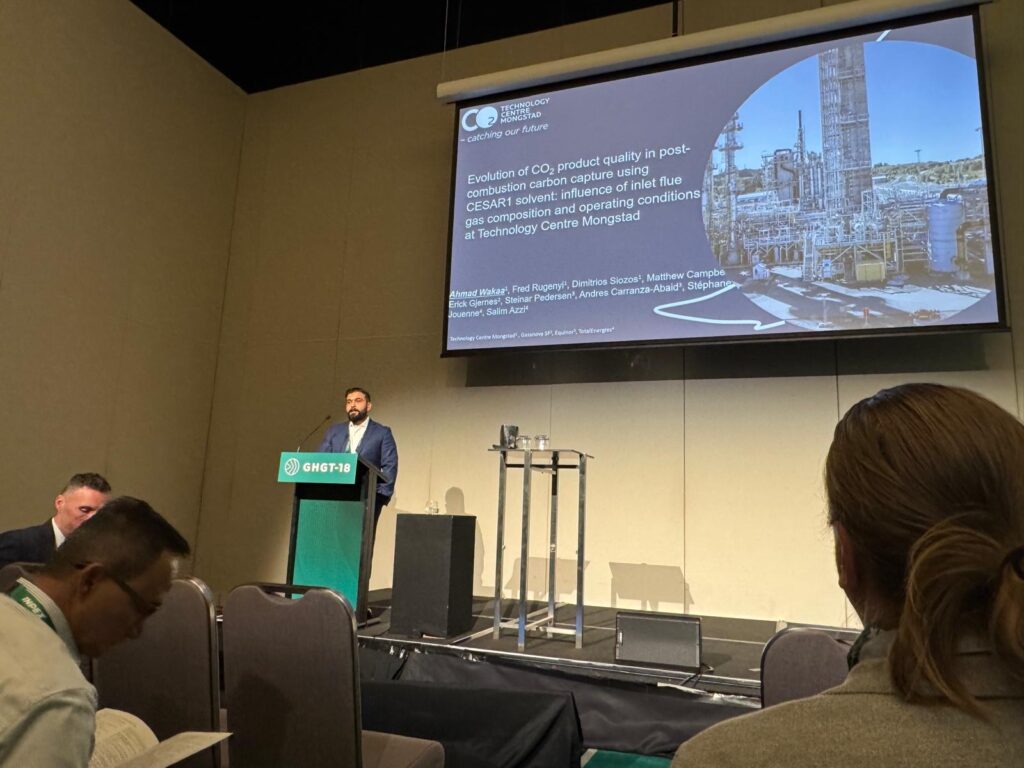
The third presentation, “Evolution of CO2 Product Quality in Post-Combustion Carbon Capture Using the CESAR1 Solvent: Influence of Inlet Flue Gas Composition and Operating Conditions at Technology Centre Mongstad”, examined how variations in flue gas composition and operating conditions during the CESAR1 owners’ campaign in late 2025 affected the quality of the captured CO2 which is an important consideration for subsequent transport, utilization and permanent storage.
A global meeting place for CCUS
GHGT is one of the world’s leading international conference series dedicated to greenhouse gas control technologies. Organised by the International Energy Agency’s Greenhouse Gas R&D Programme (IEAGHG), the conference brings together researchers, technology developers, industrial companies, policymakers and other stakeholders from across the global carbon capture, utilisation and storage (CCUS) community.
The Perth edition attracted more than 1,100 participants from 41 countries. Its programme covered the entire CCUS value chain, from advances in capture technologies and industrial demonstration projects to CO2 transport, geological storage, economics and regulatory developments.
The conference provides an important arena for presenting new research, exchanging experience and establishing the partnerships needed to accelerate the commercial deployment of CCUS technologies.
Participation in international forums such as GHGT reinforces TCM’s position as a leading centre of expertise in testing CO2 capture technologies.
Turning research into industrial progress
Since its establishment in 2012, TCM has built extensive experience in testing, verifying and improving CO2 capture technologies at industrial scale. Its facilities at Mongstad provide a unique opportunity to investigate how different technologies perform using real industrial flue gases under a wide range of operating conditions.
This is particularly important because results achieved in laboratories and smaller pilot facilities do not necessarily translate directly into reliable and cost-effective performance at full industrial scale.
TCM helps bridge this gap by providing technology developers and industrial partners with access to advanced test facilities, specialised instrumentation and experienced technical personnel. The resulting data and operational experience help identify challenges, optimise processes and reduce the technical and financial risks associated with future investments.
The AURORA campaign, which was conducted at TCM in 2025, is a good example. Thisfour-month campaign tested the non-proprietary CESAR1 solvent under different industrial conditions, including variations in flue gas composition and operating parameters. The work generated valuable insights into solvent performance, operational stability, emissions. Meanwhile the CESAR1 owners’ campaign, conducted in late 2025, focused on understanding how flue gas impurities and capture-process operating conditions affect the quality of the captured CO2 in the gas phase before conditioning.
Sharing these findings at international conferences such as GHGT-18 allows the wider research and industrial community to benefit from the knowledge generated at TCM.
“Developing carbon capture technologies that are both technically reliable and economically viable requires more than promising results in a laboratory. We need to understand how they perform under realistic industrial conditions, identify opportunities for improvement and share what we learn. This is where TCM can make an important contribution,” says Wakaa.
Knowledge sharing drives innovation
As the global deployment of carbon capture continues to develop, the need for reliable performance data, technology verification and practical operational experience is becoming increasingly important.
No single company or research institution can address all the technical challenges involved. Progress depends on close cooperation between research organisations, technology providers, industrial operators and test facilities.
By contributing to scientific conferences, publishing research and sharing operational experience, TCM makes valuable knowledge available to the international CCUS community. This knowledge supports the development and qualification of technologies that can reduce energy consumption, minimise emissions and lower the overall cost of CO2 capture.
“The knowledge we generate at TCM becomes even more valuable when it is shared and used by others. The international collaboration and the exchange of experience are essential to accelerate the development and deployment of cost-effective carbon capture solutions,” Wakaa concludes.
For TCM, GHGT-18 was therefore more than a platform for presenting research results. It also provided a valuable forum for strengthening international cooperation and contributing to the collective effort to advance efficient and affordable carbon capture technologies towards widespread industrial deployment.